
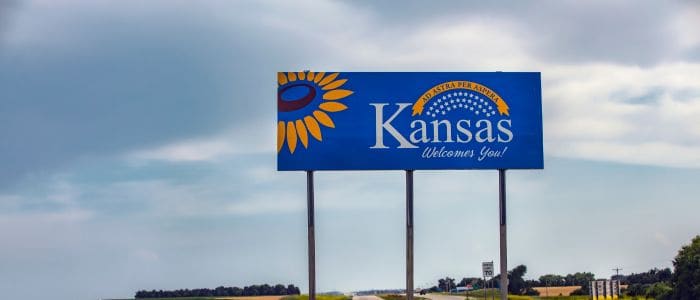
 The Kansas legislature recently took a major step forward to improve Medicaid dental care by approving a major increase in its Medicaid dental fee schedule. The increase became effective July 1.
Fees increased up to 50%
Fees for exams are being increased by 50%, while cleanings, scaling & root planning are being increased by 35%, X-rays and composite fillings by 20%, and all other dental codes by 10%. This is the result of adding $10 million to the state healthcare budget.
Now, before we say how great this is, we should point out that it is the state’s first meaningful increase in more than 25 years. So it has been a long time coming.
Provider distress led to fee increase
This increase comes at a time when only about 30 percent of Kansas dentists are enrolled as Medicaid providers. For years, as elsewhere, many have cited the state’s stagnant reimbursement rates as the main reason they could not continue to see Medicaid patients.
Similar to Texas dentists, Medicaid dental providers in Kansas were pushed to their limits as the testimony of one dentist to the Kansas Senate illustrates:
“I have cared for our community as a pediatric dental specialist in Johnson County for the last 20 years, after completing my pediatric dental residency at Children’s Mercy Hospital in 2005. During my career, I have had the privilege of maintaining and restoring dental health to many thousands of children and creating relationships with families that span generations. I have cared for these children with respect and compassion and have always opened my doors to ALL children, regardless of their abilities or socioeconomic status. This means that I, and the associate dentists I employ, have been proud Medicaid providers since the inception of my practice. While Medicaid reimbursements are understandably lower than private insurance reimbursements, the gap between Medicaid reimbursements and the costs to serve these patients has grown to a level that is no longer sustainable.
“Post-covid, we all know that costs to operate a business have greatly increased. My payroll costs, to hire qualified support staff, has gone up 35%. My supply costs have gone up at a similar rate. However, reimbursements for my services to the children of our state have remained the same. Unlike a restaurant or other business, I am unable to pass along the increased costs-to-do-business to my patients as I am limited by payment from insurance companies. Prior to Covid, I could cover the loss I took on Medicaid reimbursements with the margins from my private insurance patients. Yet now all margins are smaller, so I am actually losing money when I choose to see a family with Medicaid, especially those children who are medically compromised with special healthcare needs requiring more time or sedation dentistry.
“As a dedicated public servant, I know everyone on this committee understands the commitment we feel to the families we serve, and I never want a family’s insurance to limit their ability to receive the best pediatric dental care available. However, being a Medicaid dental provider is currently not a tenable way to maintain a business and it is the unfortunate reality I am facing. So I am in an ethical dilemma as a pediatric dentist and business owner, who supports the local economy of Johnson County as an employer and business, yet also desires to serve all local children and children across the state. I have a fiduciary responsibility to keep the doors open to my practice to continue to serve patients, but serving those patients with Medicaid is hindering me from keeping my doors open.”
Win for Kansas providers
According to Kansas’ “Pathways to Oral Health,” more than 75 dental providers participated in discussions to help shape where the increases would be most effective, and their insights guided the rate adjustments.
Tanya Dorf Brunner, executive director of Oral Health Kansas, described the increase as a foundation to build upon, but noted that Kansas will likely need to invest an additional $30 million to fully align rates with real-world costs and encourage broader participation among providers.
Kevin Robertson, executive director of the Kansas Dental Association, praised the move as a long-overdue acknowledgement of the burden placed on dental practices and an important signal that the state is serious about improving dental access. He expressed optimism that the increase would not only support current Medicaid dentists but potentially draw more providers into the program.
Texas could do better
It is heartening to see this collaborative approach between state and dental association representatives in creating a fee schedule that benefits all those in the Medicaid program, unlike the recent fee situation in Texas.